12manage - Management portal summarizes over 400 management methods and organizational theories and explains over 1500 management terms, combining scientific rigor with practical relevance. Classification into the following 12 categories : Change & Organization, Communication & Skills, Decision-making & Valuation, Ethics & Responsibility, Finance & Investing, Human Resources, Knowledge & Intangibles, Leadership, Marketing, Program & Project Management, Strategy, and Supply Chain & Quality. Access is free. Translations in 12 languages.
6 Mar 2006
9 Feb 2006
Foresight conference, Bled Forum on Europe
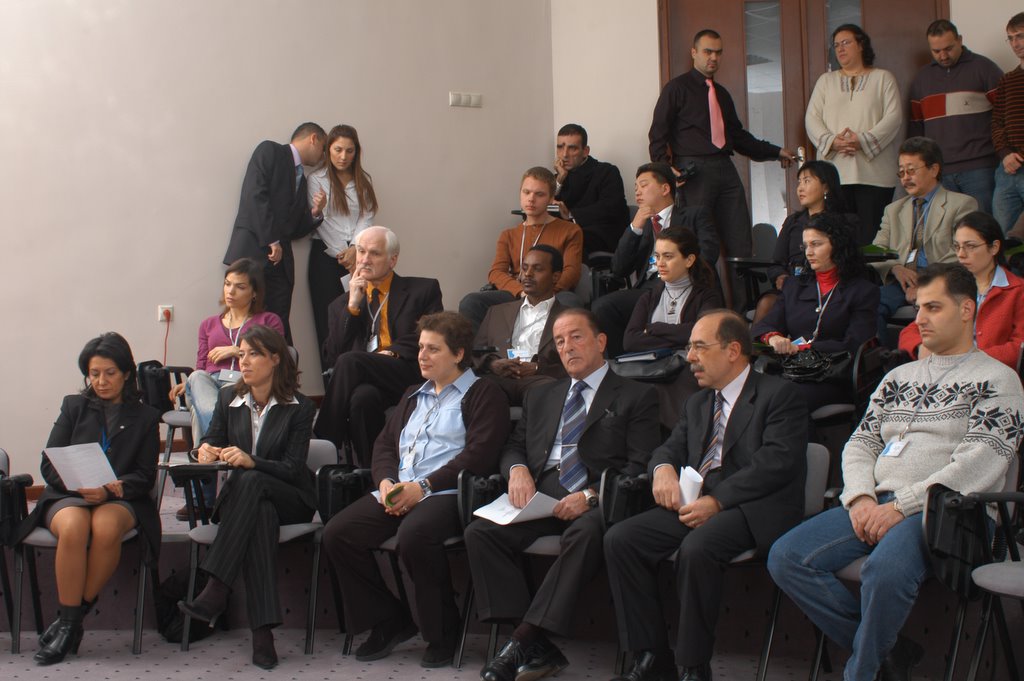
Foresight Conference on Global, European and Regional Governance 3–4 March 2006, Bled/Slovenia
Goals:
See Invitation
With this conference the organisers want to contribute to the further advancement of foresight research in Europe and especially also to the
development of scientific capacities for foresight research (technological and socioeconomic foresight) in so called Western Balkan countries (Croatia, Bosnia and Herzegovina, Serbia and Montenegro, Macedonia, and Albania).
Main topics of the conference will be:
– Global challenges (AC UNU Millennium Project) and the role of Foresight for global governance
– European challenges (Lisbon process and beyond) and the role of Foresight for European policy making
– Governance challenges for Southeast European or Western Balkan countries and the role of Foresight for policy making in and towards this region.
The conference also aims at providing a basic overview on who is doing what in foresight research in SEE countries. In addition, researchers from SEE countries active in foresight research shall get an opportunity to find out about »state of the art« in foresight research, about global, and Europe-wide programmes and networks on foresight research in order to facilitate the integration of SEE foresight researchers in existing networks and programmes.
Furthermore the conference aims at giving an impetus to regional foresight studies focusing on SEE region (comparable to the IPTS Enlargement Futures-Project).
online at ForSociety
Goals:
See Invitation
With this conference the organisers want to contribute to the further advancement of foresight research in Europe and especially also to the
development of scientific capacities for foresight research (technological and socioeconomic foresight) in so called Western Balkan countries (Croatia, Bosnia and Herzegovina, Serbia and Montenegro, Macedonia, and Albania).
Main topics of the conference will be:
– Global challenges (AC UNU Millennium Project) and the role of Foresight for global governance
– European challenges (Lisbon process and beyond) and the role of Foresight for European policy making
– Governance challenges for Southeast European or Western Balkan countries and the role of Foresight for policy making in and towards this region.
The conference also aims at providing a basic overview on who is doing what in foresight research in SEE countries. In addition, researchers from SEE countries active in foresight research shall get an opportunity to find out about »state of the art« in foresight research, about global, and Europe-wide programmes and networks on foresight research in order to facilitate the integration of SEE foresight researchers in existing networks and programmes.
Furthermore the conference aims at giving an impetus to regional foresight studies focusing on SEE region (comparable to the IPTS Enlargement Futures-Project).
online at ForSociety
7 Feb 2006
the source
to perform learning activities, live and foresight, there is the eternal source
----
GOD IS LOVE
ENCYCLICAL LETTER DEUS CARITAS EST OF THE SUPREME PONTIFF BENEDICT XVI
----
GOD IS LOVE
ENCYCLICAL LETTER DEUS CARITAS EST OF THE SUPREME PONTIFF BENEDICT XVI
1 Jan 2006
one thing remains the same - education and knowledge is the only route to prosperity
Education and regeneration 18 November 2005
Education is the spark that can light a love of learning, and we know what learning means - horizons broadened, imaginations are fired, confidence and ambition take root. Success only comes through hard work, but how much easier it is to work hard if you can feel the strength of your own inner potential. That is what a good teacher and a thriving school does, they give a child that most precious asset in life - self-belief.
...
education is the liberator, it is the gateway, it is the only thing that can transform their lives
...
And when we change and make changes that are necessary to provide opportunities, because the world around us is changing so fast, we don't betray the principles in which we believe, we fulfil them.
...
This country will succeed or fail on the basis of how it changes itself and gears up to this new economy, based on knowledge.
...
Education therefore is now the centre of economic policy making for the future. What I am saying is, we know what works within our education system, we can learn the lessons of it. The key is now to apply those lessons, push them right throughout the education system, until the young children, whether they are growing up here in the constituency of Sedgefield, or in the inner city urban estates of London, or Liverpool, or Manchester, or Newcastle, wherever they are, they get the chance to make the most of their God given potential. It is the only vision, in my view, that will work in the 21st century.
18 November 2005
Tony Blair gave a speech on education in his constituency of Sedgefield.
PM's speeches, statements, press conferences, broadcasts and media interviews
Education is the spark that can light a love of learning, and we know what learning means - horizons broadened, imaginations are fired, confidence and ambition take root. Success only comes through hard work, but how much easier it is to work hard if you can feel the strength of your own inner potential. That is what a good teacher and a thriving school does, they give a child that most precious asset in life - self-belief.
...
education is the liberator, it is the gateway, it is the only thing that can transform their lives
...
And when we change and make changes that are necessary to provide opportunities, because the world around us is changing so fast, we don't betray the principles in which we believe, we fulfil them.
...
This country will succeed or fail on the basis of how it changes itself and gears up to this new economy, based on knowledge.
...
Education therefore is now the centre of economic policy making for the future. What I am saying is, we know what works within our education system, we can learn the lessons of it. The key is now to apply those lessons, push them right throughout the education system, until the young children, whether they are growing up here in the constituency of Sedgefield, or in the inner city urban estates of London, or Liverpool, or Manchester, or Newcastle, wherever they are, they get the chance to make the most of their God given potential. It is the only vision, in my view, that will work in the 21st century.
18 November 2005
Tony Blair gave a speech on education in his constituency of Sedgefield.
PM's speeches, statements, press conferences, broadcasts and media interviews
18 Dec 2005
LEARNING FORESIGHT ONLINE
THE FOR-LEARN PROJECT
JRC-IPTS European Commission
About the FOR-LEARN Online Foresight Guide
"This online guide aims to be of use both to practitioners who are designing and running Foresight activities and other stakeholders interested in the results of a Foresight exercise.
It intends to provide:
Information about Foresight
Practical guidance and advice on how to carry out an exercise
Examples illustrating the information with experience from previous exercises"
...
Diffusion and dissemination of preliminary and final results of the foresight exercises
JRC-IPTS European Commission
About the FOR-LEARN Online Foresight Guide
"This online guide aims to be of use both to practitioners who are designing and running Foresight activities and other stakeholders interested in the results of a Foresight exercise.
It intends to provide:
Information about Foresight
Practical guidance and advice on how to carry out an exercise
Examples illustrating the information with experience from previous exercises"
...
Diffusion and dissemination of preliminary and final results of the foresight exercises


17 Dec 2005
"European Co-operation in Foresight" 27-28 October 2005, Brussels
CORDIS, Science and Technology Foresight
The 7th workshop on "European Co-operation in Foresight" took place on 27-28 October 2005 in Brussels.
See the agenda and the presentations a link
Overview of all ongoing Foresight Platform projects. W.Wobbe, DG RTD K2, EC. link
"The future of R&D in services: implications for EU research and innovation policy" I. Miles, PREST. link
"The future of research and innovation policies in an enlarged EU: key issues 2015" T. Suarez, SOCINTEC. link
The 7th workshop on "European Co-operation in Foresight" took place on 27-28 October 2005 in Brussels.
See the agenda and the presentations a link
Overview of all ongoing Foresight Platform projects. W.Wobbe, DG RTD K2, EC. link
"The future of R&D in services: implications for EU research and innovation policy" I. Miles, PREST. link
"The future of research and innovation policies in an enlarged EU: key issues 2015" T. Suarez, SOCINTEC. link
30 Nov 2005

31 Oct 2005
R&D in the Baltic countries: Futures
Assessment of the Estonian Research Development Technology and Innovation Funding System
Final Report by PREST
The Victoria University of Manchester
UK
Maria Nedeva
Luke Georghiou
Word document format
Final Report by PREST
The Victoria University of Manchester
UK
Maria Nedeva
Luke Georghiou
Word document format
26 Sept 2005
SCOPE 2015
"SCOPE 2015 is a European Commission funded initiative aimed at producing scenarios for research and technology development cooperation with Europe"
Main activities
Methodology
...
From CIS Scenario 2
"Political and administrative reform agendas, where they exist, remain largely on paper with little implementation success. Consequently, the region is still marked by poor governance, characterised by high levels of political and bureaucratic corruption and clientelism, and disregard for the rule of law. Whilst such conditions persist, foreign investors stay away and the majority of the population remain in poverty. Little progress can be made in promoting national sustainable development as government and the rule of law serve only the self-interests of those in positions of power.
RTD is not viewed as a national priority for development but rather as a hangover from the past and of little relevance to today – it is an expense that can no longer be afforded. Governments show little interest in seriously pursuing innovation strategies, preferring instead to focus economic development measures upon maximising the returns from resource extraction, a cheap labour force, and deregulated business environments. National firms avoid any form of technology except that embodied in imported equipment, thereby providing little demand for the products of indigenous RTD activities. Foreign firms quickly exhaust the supply of those national scientific resources of use to industry, since these are not being renewed."
CIS Scenario 1 ; 3
...
RTD in : Latin America ; Maghreb and Mashreq ; Sub-Saharan Africa
FAQs on expected results from SCOPE project and the Feedback Zone
Main activities
Methodology
...
From CIS Scenario 2
"Political and administrative reform agendas, where they exist, remain largely on paper with little implementation success. Consequently, the region is still marked by poor governance, characterised by high levels of political and bureaucratic corruption and clientelism, and disregard for the rule of law. Whilst such conditions persist, foreign investors stay away and the majority of the population remain in poverty. Little progress can be made in promoting national sustainable development as government and the rule of law serve only the self-interests of those in positions of power.
RTD is not viewed as a national priority for development but rather as a hangover from the past and of little relevance to today – it is an expense that can no longer be afforded. Governments show little interest in seriously pursuing innovation strategies, preferring instead to focus economic development measures upon maximising the returns from resource extraction, a cheap labour force, and deregulated business environments. National firms avoid any form of technology except that embodied in imported equipment, thereby providing little demand for the products of indigenous RTD activities. Foreign firms quickly exhaust the supply of those national scientific resources of use to industry, since these are not being renewed."
CIS Scenario 1 ; 3
...
RTD in : Latin America ; Maghreb and Mashreq ; Sub-Saharan Africa
FAQs on expected results from SCOPE project and the Feedback Zone
31 Aug 2005
foresight National Innovation Systems
Brainstorming Workshop "Shaping the European Dimension of Foresight", Brussels, 28/02-1/03/2005
http://www.cordis.lu/foresight/future.htm
Information and Presentations
CORDIS, Science and Technology Foresight
----
Session 2: Foresighting Systemic Changes
R. Barré pdf
S. Kangaspunta pdf
How throughly are we able to understand a system?
• What is the NIS? How does it work?
• What are the elements, linkages, connections, interdependencies, subsystems, limits...
• How does a system change?
• Do you need to know this for a foresight?
• Can foresight help to understand a system better?
How does a system change?
• The periphery alarms? (The center is passive until problems arise in the periphery)
• Through crisis? (Because ideological, economic, social & mental rigidities, unwillingness to change, fear of changing, need of security... block necessary organisational change caused by changes in the surrounding world before a crisis clears the table)
• Flexible adaptation?
• 'Mutations'?
• Can foresight be of help in this?
• Why some systems are better in renewing themselves? Does foresight play a role?
Citizen's role?
• How does the citizen fit in the systems?
• User connection to systems?
• Needs of a citizen - needs of the System?
---
A process for producing foresight knowledge
---
Evaluation
• Evaluation of systems also aims at producing knowledge for discussion, design and decision making concerning systems
• Evaluation of systemic risks
• Evaluation technology & other issues and their possible effects on systems
---
http://www.cordis.lu/foresight/future.htm
Information and Presentations
CORDIS, Science and Technology Foresight
----
Session 2: Foresighting Systemic Changes
R. Barré pdf
S. Kangaspunta pdf
How throughly are we able to understand a system?
• What is the NIS? How does it work?
• What are the elements, linkages, connections, interdependencies, subsystems, limits...
• How does a system change?
• Do you need to know this for a foresight?
• Can foresight help to understand a system better?
How does a system change?
• The periphery alarms? (The center is passive until problems arise in the periphery)
• Through crisis? (Because ideological, economic, social & mental rigidities, unwillingness to change, fear of changing, need of security... block necessary organisational change caused by changes in the surrounding world before a crisis clears the table)
• Flexible adaptation?
• 'Mutations'?
• Can foresight be of help in this?
• Why some systems are better in renewing themselves? Does foresight play a role?
Citizen's role?
• How does the citizen fit in the systems?
• User connection to systems?
• Needs of a citizen - needs of the System?
---
A process for producing foresight knowledge
---
Evaluation
• Evaluation of systems also aims at producing knowledge for discussion, design and decision making concerning systems
• Evaluation of systemic risks
• Evaluation technology & other issues and their possible effects on systems
---
30 Aug 2005
Global Foresight Network
GFN
Welcome designers and developers of ideas and processes which integrate futures thinking with 21st century navigation based strategy
Locations
"Strategic Foresight - the power of standing in the future"
Mike McAllum, and co-authors Dominique Purcell & Nick Marsh
The goal of the book has been to bring strategic planning up to date with the pressing requirements of the Knowledge Age.
Welcome designers and developers of ideas and processes which integrate futures thinking with 21st century navigation based strategy
Locations
"Strategic Foresight - the power of standing in the future"
Mike McAllum, and co-authors Dominique Purcell & Nick Marsh
The goal of the book has been to bring strategic planning up to date with the pressing requirements of the Knowledge Age.
17 Aug 2005
Latvian innovation/RTD policy
From the RIS project to the Latvian Innovation system
Strategy and Action Plan 2005 - 2010 (pdf format)
Summary and outlook
"Innovation policy is not effective if it aims at
individual and isolated goals, even if those goals
are brilliant. On the contrary, innovation policy
must be comprehensive, setting in to support the
implementation of initiatives that develop both the
integration-competence of companies and the
delivery-competence of support organisations. A
national, comprehensive and publicly co-funded
programme aiming at increasing management
competence of companies is necessary. When
designing such a programme, a number of key
considerations apply."
"Collaboration and co-operation are the keys to
success. Public support to companies should
always incorporate a horizontal element of
collaboration and co-operation. Collaboration
should be fostered between companies, between
companies and R&D-organisations and between
companies and other support-providing
organisations. Only by increasing interaction in the
Latvian innovation system will it be possible to fully
exploit the potential that is hidden in companies
and in the R&D system. Public policy should aim at
breaking this vicious circle. For example, an
opening-up of the R&D community to other sectors
of society is crucial for success. It may take ten
years, but eventually it must be accepted and even
encouraged that researchers work closely with
industry. The following is a list of policy-related
recommendations based upon the findings of RIS:"
1.- 12.
(pp.33-35)
------
Strategy and Action Plan 2005 - 2010 (pdf format)
Summary and outlook
"Innovation policy is not effective if it aims at
individual and isolated goals, even if those goals
are brilliant. On the contrary, innovation policy
must be comprehensive, setting in to support the
implementation of initiatives that develop both the
integration-competence of companies and the
delivery-competence of support organisations. A
national, comprehensive and publicly co-funded
programme aiming at increasing management
competence of companies is necessary. When
designing such a programme, a number of key
considerations apply."
"Collaboration and co-operation are the keys to
success. Public support to companies should
always incorporate a horizontal element of
collaboration and co-operation. Collaboration
should be fostered between companies, between
companies and R&D-organisations and between
companies and other support-providing
organisations. Only by increasing interaction in the
Latvian innovation system will it be possible to fully
exploit the potential that is hidden in companies
and in the R&D system. Public policy should aim at
breaking this vicious circle. For example, an
opening-up of the R&D community to other sectors
of society is crucial for success. It may take ten
years, but eventually it must be accepted and even
encouraged that researchers work closely with
industry. The following is a list of policy-related
recommendations based upon the findings of RIS:"
1.- 12.
(pp.33-35)
------
11 Jul 2005
Foresight at a crossroads
Michael Keenan, Fabiana Scapolo
PILOT PROJECT TO SCOPE THE
ESTABLISHMENT OF A EUROPEAN
FORESIGHT ACADEMY
EUR No: 21406 EN, Year: 2004 a link
List of Available Reports: EC, DG JRC - IPTS, ESTO network a link
"Foresight practice today stands at a crossroads. It can develop significantly further, diffusing into ever new areas and situations. Or it can retreat as a passing fad that has had its day for the time being, with a possible return in 2020. The determining factors on the direction that will be followed are manifold, and include the demonstrable usefulness of Foresight in policy and investment decision-making, and the development of a community of practice committed to Foresight as a process. At the time of writing, such a community of practice is beginning to emerge in Europe."
PILOT PROJECT TO SCOPE THE
ESTABLISHMENT OF A EUROPEAN
FORESIGHT ACADEMY
EUR No: 21406 EN, Year: 2004 a link
List of Available Reports: EC, DG JRC - IPTS, ESTO network a link
"Foresight practice today stands at a crossroads. It can develop significantly further, diffusing into ever new areas and situations. Or it can retreat as a passing fad that has had its day for the time being, with a possible return in 2020. The determining factors on the direction that will be followed are manifold, and include the demonstrable usefulness of Foresight in policy and investment decision-making, and the development of a community of practice committed to Foresight as a process. At the time of writing, such a community of practice is beginning to emerge in Europe."
8 Jul 2005
Genesis, Euforia
This important e-publication (European Foundation, 2001) helps in understanding the genesis of the Euforia project and will be of great interest to those involved in the many aspects of Knowledge Society research and reflection.
Living conditions, working conditions
and industrial relations in the
knowledge society
Summary of workshops
Dublin, 13-14 July and 27-28 November 2000
EUROPEAN FOUNDATION
for the Improvement of Living and Working Conditions
(an autonomous body of the European Union, created to assist the formulation of future policy on social and work-related matters)
http://www.eurofound.ie/publications/files/EF0123EN.pdf
"The European Foundation for the Improvement of Living and Working Conditions organized two research workshops in 2000 related to the emerging knowledge society. The challenge of the workshops was to produce new ideas for the Foundation's Four Year Rolling Programme 2001-2004 by putting together three future oriented project areas. The first area covered the Foundation's own project on the New Forms of Work in the Information Society, especially development of atypical work, telework, flexitime, flexispace, flexi contract and virtual company. The second area covered the work done by the Commission related to the development of information society, especially the strategic challenge to make Europe "the most competitive and dynamic knowledge-based economy in the world." The third innovative area consisted of national technology foresights projects from selected European, Asian and African countries.
This report is a summary of the workshop speeches, group works and discussions."
---
The Euforia project, web site
The Project poster (gif)
Living conditions, working conditions
and industrial relations in the
knowledge society
Summary of workshops
Dublin, 13-14 July and 27-28 November 2000
EUROPEAN FOUNDATION
for the Improvement of Living and Working Conditions
(an autonomous body of the European Union, created to assist the formulation of future policy on social and work-related matters)
http://www.eurofound.ie/publications/files/EF0123EN.pdf
"The European Foundation for the Improvement of Living and Working Conditions organized two research workshops in 2000 related to the emerging knowledge society. The challenge of the workshops was to produce new ideas for the Foundation's Four Year Rolling Programme 2001-2004 by putting together three future oriented project areas. The first area covered the Foundation's own project on the New Forms of Work in the Information Society, especially development of atypical work, telework, flexitime, flexispace, flexi contract and virtual company. The second area covered the work done by the Commission related to the development of information society, especially the strategic challenge to make Europe "the most competitive and dynamic knowledge-based economy in the world." The third innovative area consisted of national technology foresights projects from selected European, Asian and African countries.
This report is a summary of the workshop speeches, group works and discussions."
---
The Euforia project, web site
The Project poster (gif)

7 Jul 2005
Foresight in the Lisbon process
XTREME EUFORIA: COMBINING FORESIGHT METHODS a link
Rafael Popper, Werner B. Korte
Keywords: Foresight methods, Knowledge Society, Europe and the Lisbon objectives.
(EU-US SEMINAR: NEW TECHNOLOGY FORESIGHT, FORECASTING & ASSESSMENT METHODS. Seville 13-14 May 2004)
"The EUFORIA project was launched to explore the Knowledge Society and new ways of organising, designing and managing foresight activities. The combination of several 'hard' (performance indicators, critical influences analysis) and 'soft' (literature review, brainstorming, panels, workshops, Delphi and scenario building) techniques was carried out in a multi-cultural and cross-regional setting to achieve further insights and gain experiences with respect to the strengths and weaknesses of different individual and combined approaches for goal achievement as part of foresight activities."
---
Euforia, Knowledge Society Foresight Reports
---
The knowledge society in Greece: current situation and future trends
"Scenarios for the development of a KS in Greece
Background
Based on the current situation and the major drivers and trends characterising the course of Greece to the Knowledge Society, three scenarios were developed:
- the “Awakening” scenario where social change and radical reconsideration occurs and the conditions are created for the trends to have positive impacts and for the negative impacts to be tackled,
- the “Lethargy” scenario with no major changes from today (business as usual), and
- the “Nightmare” scenario where the characterising trends lead to negative impacts due to ineffectiveness of measures, no real change and other external factors with severe consequences."
---
Rafael Popper, Werner B. Korte
Keywords: Foresight methods, Knowledge Society, Europe and the Lisbon objectives.
(EU-US SEMINAR: NEW TECHNOLOGY FORESIGHT, FORECASTING & ASSESSMENT METHODS. Seville 13-14 May 2004)
"The EUFORIA project was launched to explore the Knowledge Society and new ways of organising, designing and managing foresight activities. The combination of several 'hard' (performance indicators, critical influences analysis) and 'soft' (literature review, brainstorming, panels, workshops, Delphi and scenario building) techniques was carried out in a multi-cultural and cross-regional setting to achieve further insights and gain experiences with respect to the strengths and weaknesses of different individual and combined approaches for goal achievement as part of foresight activities."
---
Euforia, Knowledge Society Foresight Reports
---
The knowledge society in Greece: current situation and future trends
"Scenarios for the development of a KS in Greece
Background
Based on the current situation and the major drivers and trends characterising the course of Greece to the Knowledge Society, three scenarios were developed:
- the “Awakening” scenario where social change and radical reconsideration occurs and the conditions are created for the trends to have positive impacts and for the negative impacts to be tackled,
- the “Lethargy” scenario with no major changes from today (business as usual), and
- the “Nightmare” scenario where the characterising trends lead to negative impacts due to ineffectiveness of measures, no real change and other external factors with severe consequences."
---
Subscribe to:
Posts (Atom)